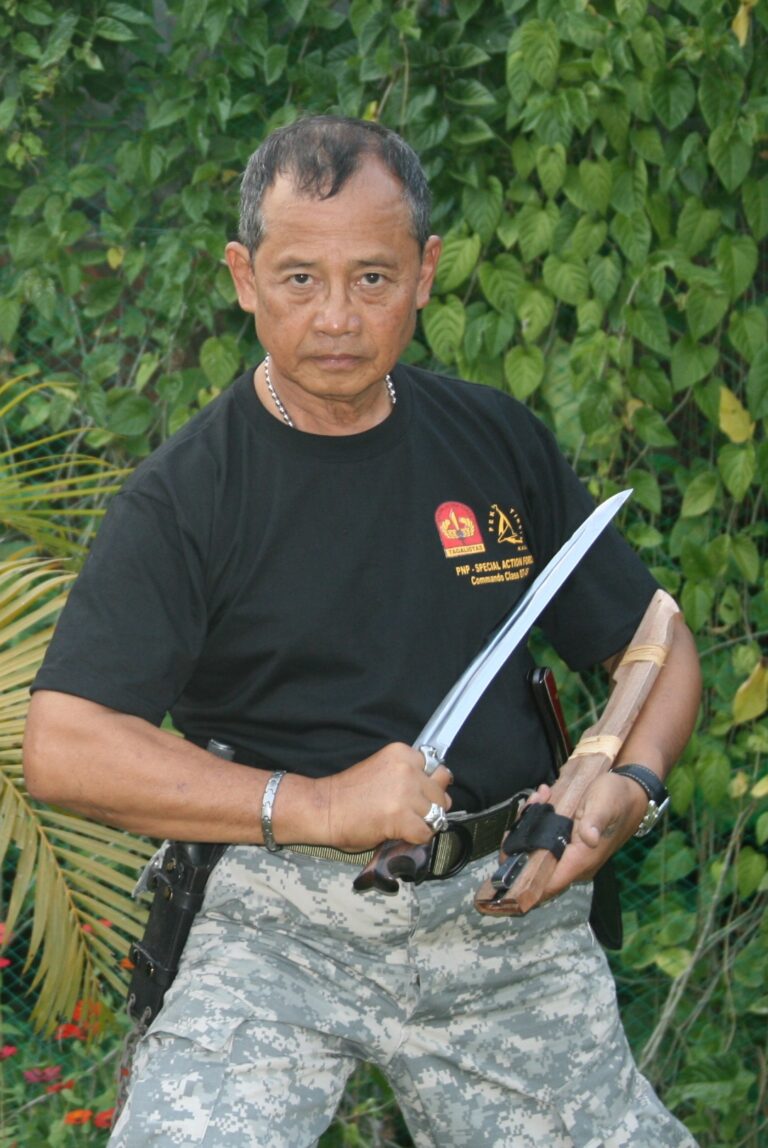
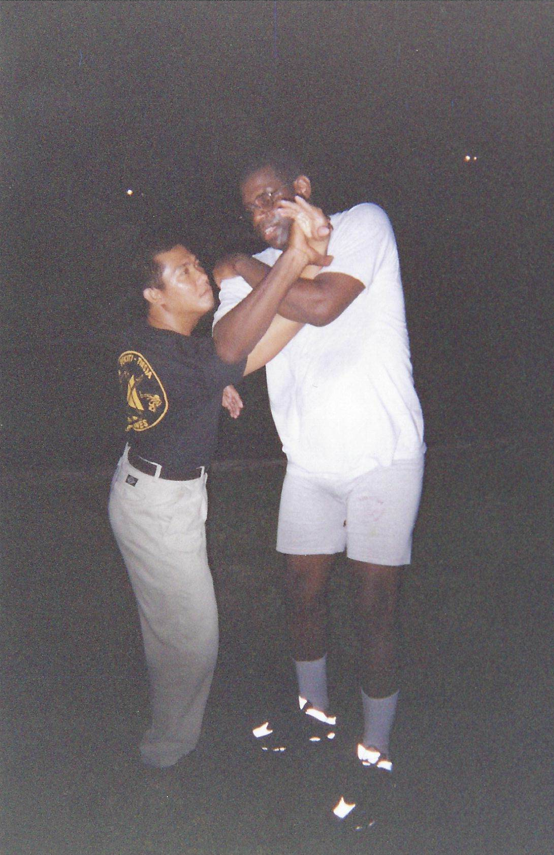
In Illongo dialect of the Visayan, Pekiti-Tirsia means “Close-Thirds”. A more common phrasing would be “Close Quarters”. The system is based around principles of 3, such as the famous 3 ranges, 3 levels, and 3 opponents concept. The system was originally build around 5 main weapons categories:
Solo – single stick, sword, or spear
Doble – double stick or sword
Espada y Daga – sword and dagger
Daga y Daga – knife to knife (single and double)
Mano y Mano – hand to hand
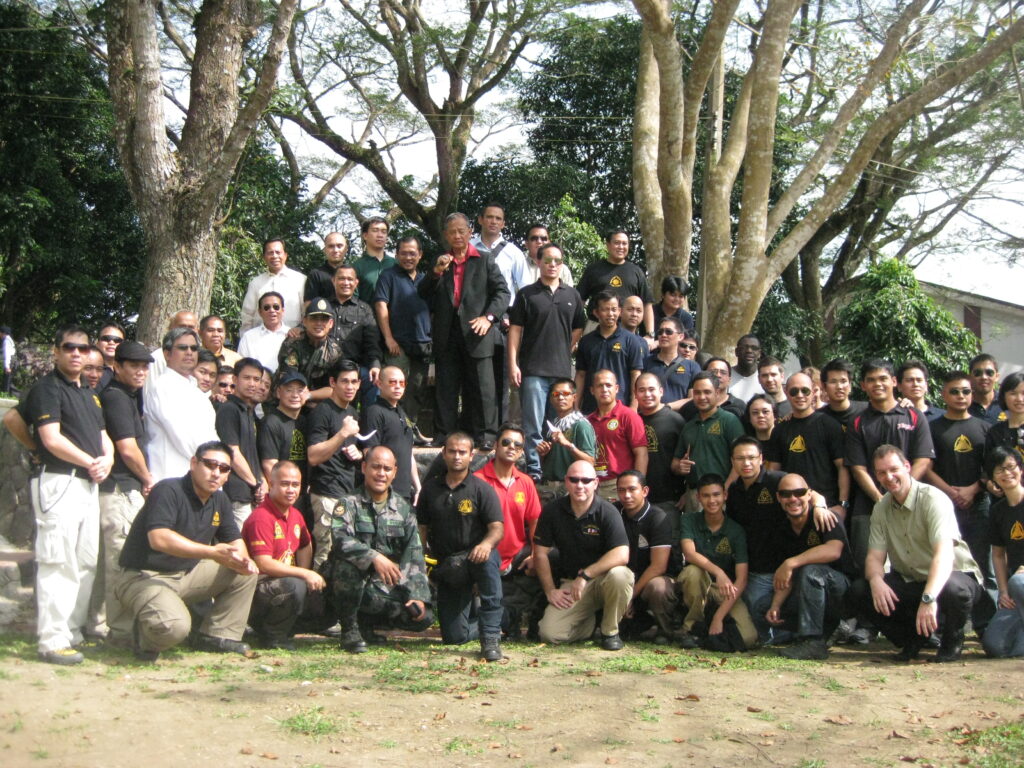
Pekiti-Tirsia is the oldest officially recognized Filipino Martial art in the world. The 100 year anniversary celebration was held in Subic Bay in the Philippines on October 24th 1997. The current keeper of Pekiti-Tirsia Kali is Grand Tuhon Supremo Leo T. Gaje Jr, a postion he has held for over 50 years, In 2008 his son Leo III was officially named as Heir-Inheritor to the system. Throughout his career GT has been the first FMA grandmaster to be recognized by several organizations such as The Martial Arts Hall of Fame, Karate Hall of Fame, United States Karate Association International, Philippines Marine Corp, Federal Police Academy of Germany, and even the first FMA grandmaster to be recognized by the Philippine government in 1988 by Emmanuel W. Pelaez. Grand Tuhon Leo was taught by his grandfather Conrado B. Tortal starting at the age of 6 in 1944. Grand Tuhon Leo brought the system to America in New York City in 1972, the first time the system had every been taught outside the Philippines. GT is considered an expert in the development and application of force techniques for the international law enforcement community and his training video “Surviving Edged Weapons” is still used for law enforcement to this day.